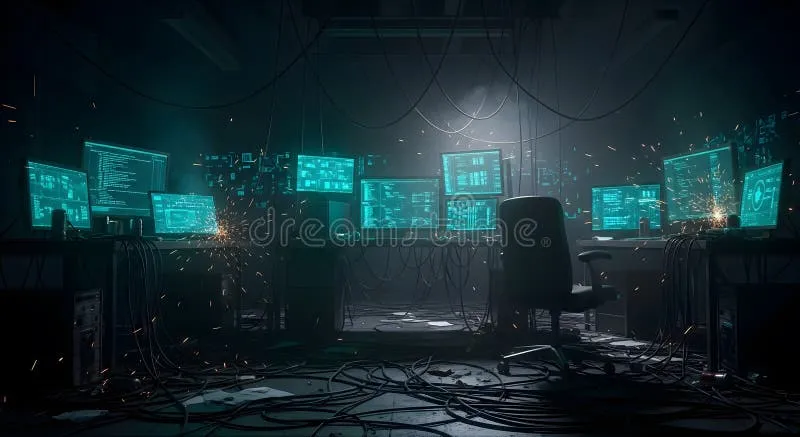
Frequency Faithful: The Collectors Who Pay a Fortune for Nothing but Noise
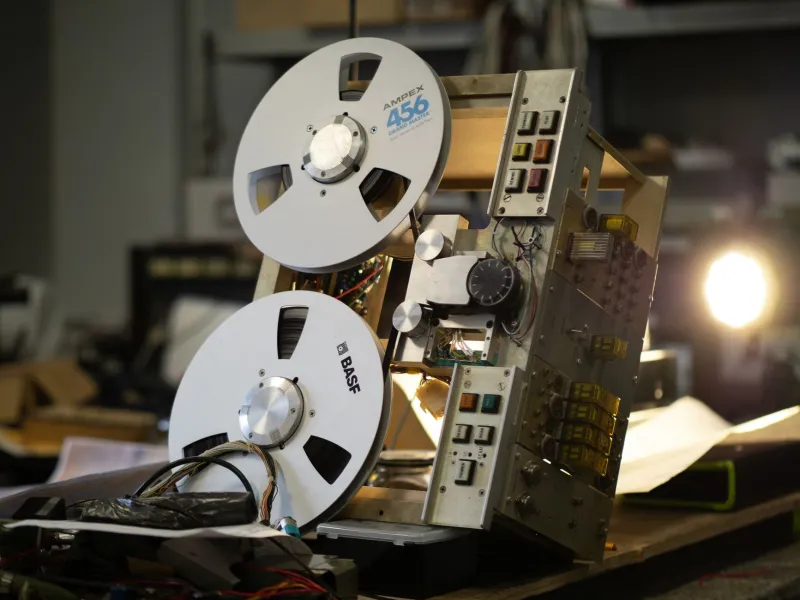
There's a guy in Portland — goes by the handle Hiss_Actual online — who spent eleven months tracking down a 1967 Elco noise generator that had spent most of its life in a university acoustics lab before being sold at an estate sale for fourteen dollars. He paid $2,400 for it. He will tell you, without a trace of irony, that it was a bargain.
"People think I'm buying broken equipment," he says. "I'm buying the only thing that equipment was ever supposed to make."
What he's buying is static. White noise. The audio equivalent of a blank canvas — except, to collectors like Hiss_Actual, it's anything but blank.
The Texture of Nothing
The community doesn't have an official name. Some call themselves noise archivists. Others prefer signal purists. Most just say they're into static, and let the confused silence from whoever they're talking to do the explaining. Online, they gather in small Discord servers and niche subreddits with membership counts in the hundreds rather than millions. That insularity isn't accidental — it's kind of the point.
What unites them is a shared belief that static isn't the absence of sound. It's a presence. A texture. And depending on the source — the equipment, the era, the specific analog chain that generated it — it has qualities that are genuinely, measurably different from one recording to the next.
To the uninitiated, white noise is white noise. A sound machine from Target, a YouTube video titled "10 Hours of Rain," a busted TV left on channel three — it all sounds like the same ambient hiss. But spend twenty minutes inside one of these collector communities and you'll start hearing distinctions you didn't know existed. Warm noise versus cold noise. Analog grain versus digital flatness. The difference between a 1970s broadcast transmitter's idle hum and the cleaner, almost antiseptic output of modern solid-state generators.
"Vinyl collectors talk about warmth," says one archivist who runs a catalog of over four thousand static samples she calls the Ambient Register. "We're doing the same thing. The warmth is real. The texture is real. You just have to train your ears to stop filtering it out."
The Gear Hunt
Vintage noise-generating hardware occupies the same weird corner of the collector market as antique test equipment and Cold War-era broadcast gear — undervalued by most, fetishized by a few. Analog noise generators from the mid-twentieth century, the kind that once sat in university research labs or broadcast engineering bays, can fetch serious money from the right buyer. Not because they're rare in the way a first-pressing record is rare, but because their age means their components have drifted in ways that modern equipment simply can't replicate.
Resistors age. Capacitors drift. The internal temperature characteristics of decades-old electronics create what collectors describe as "seasoned" noise — static that has, through years of thermal cycling and component wear, developed a signature that newer gear can't produce fresh out of the box.
Some of the most sought-after pieces include old broadcast limiters, telephone network noise sources used in telecommunications testing, and certain models of analog synthesizer that produced noise as a byproduct of their signal chains rather than as an intentional output. The latter category especially — gear that wasn't designed to make static but did anyway — occupies a kind of mythological status in the community.
"There's a specific sound from a particular brand of 1970s mixing console when it's running hot," says one collector based in Austin who asked to remain anonymous. "I've heard maybe three recordings that captured it cleanly. I'd pay a lot for a fourth."
Archiving the Invisible
If the gear hunters are the collectors, then the archivists are the librarians — and they take the cataloging side of this hobby with a seriousness that borders on academic. The Ambient Register mentioned earlier is one of several community-maintained databases of static recordings, each sample tagged with metadata that would feel excessive applied to anything else: source equipment, recording chain, room temperature at time of capture, magnetic tape stock if applicable, analog-to-digital conversion method, bit depth, and a series of subjective descriptors that the community has developed over years of collaborative listening.
Those subjective tags — terms like "granular," "velvet," "coastal," "procedural" — sound like they belong on a wine label. But within the community, they function as a genuine shared vocabulary, a way of communicating aesthetic qualities that don't have established technical names.
"We're doing what archivists always do," says the woman behind the Register, who works professionally as a sound designer for post-production. "We're preserving something that nobody else thinks is worth preserving. That's always how it starts."
She draws a direct comparison to early music preservation efforts — the field recordings of Alan Lomax, the Library of Congress ethnomusicology archives, the obsessive documentation of regional folk traditions that mainstream institutions ignored until they were nearly gone. Static, she argues, is subject to the same forces of entropy. Old analog equipment breaks down, gets scrapped, or gets "repaired" in ways that eliminate the very imperfections that gave it character. Recordings degrade. The specific noise floor of a 1960s AM broadcast tower is not a thing that can be recreated once the tower is gone.
"You lose it and it's lost," she says. "Same as anything else."
Why It Matters (Or Why It Doesn't Have To)
The meditative dimension of this community is harder to quantify but impossible to ignore. A significant portion of collectors describe their relationship with static in terms that are explicitly about mental state — focus, calm, dissociation from the relentless signal-density of contemporary life. White noise as a tool for quieting the noise.
There's real science in that vicinity. Research on stochastic resonance — the phenomenon where a certain amount of background noise can actually enhance the detection of weak signals in neural systems — has given the community a semi-technical framework for discussing why specific frequencies and textures feel different from others. Whether that framework fully explains the experience or just provides convenient language for it is a question the collectors themselves debate.
What's harder to argue with is the simple fact that these people have built something — a culture, a vocabulary, an archive — around a sound that most of the world treats as the definition of nothing. In the EOPL Static universe, that's not a footnote. That's the whole transmission.
Hiss_Actual runs his 1967 Elco generator for about an hour most evenings. He records every session. He's cataloged over two hundred distinct recordings from that single machine, each tagged, each slightly different from the last as the aging components continue their slow, irreversible drift.
"It's changing all the time," he says. "One day it'll be gone. That's why you document it."
The static plays on. Someone's listening.