Ghost Grid: The Retired Engineers Who Still Know Where the Dead Channels Are
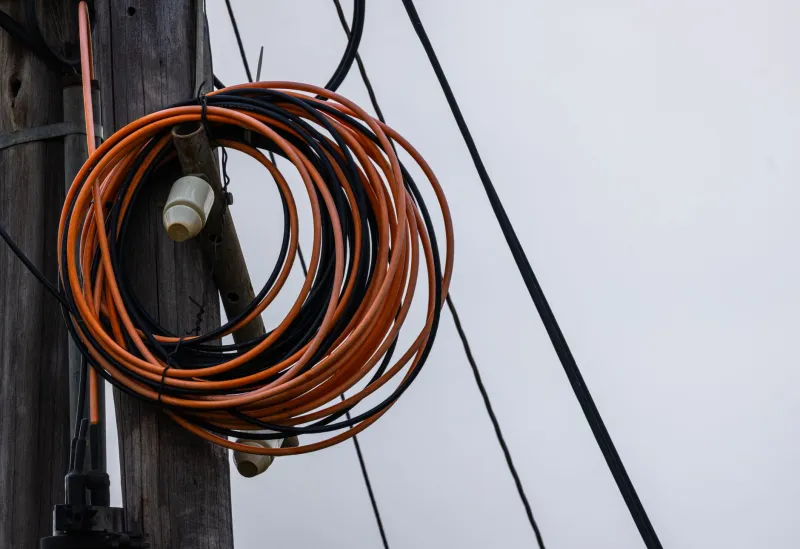
Pull up your cable box. Flip past the shopping networks, past the regional sports overflow channels, past the Spanish-language telenovela blocks. Keep going. Eventually you hit a wall — a dead zone where the channel numbers just stop making sense. Static. Blue screens. Numbered slots with no names attached.
Most people assume that's just the end of the road. Unused real estate. Filler.
But there's a quiet, aging contingent of former broadcast and cable engineers who'll tell you something different. Those empty slots aren't just unused. Some of them are tombstones.
The Blueprint Nobody Filed
In the 1970s and 80s, when cable television was expanding through American cities like kudzu, the infrastructure buildout was fast, messy, and often underdocumented. Franchise agreements got signed, trunk lines got buried, amplifier nodes got bolted to utility poles — and then the paperwork got lost, misplaced, or simply never created in the first place.
Retired engineer Dale Uffman spent 31 years working cable infrastructure in the mid-Atlantic region. He keeps three-ring binders in his home office — hand-annotated, coffee-stained, some pages barely legible — that document transmission pathways for systems that no longer exist. Cable companies that got absorbed into larger conglomerates. Local access infrastructure that got decommissioned when a municipality lost its franchise deal. Experimental neighborhood distribution systems that ran for a few years in the late 80s before the parent company decided the ROI wasn't there.
"When those systems went dark, nobody came around to collect the documentation," Uffman says. "The physical infrastructure stayed in the ground. Some of it is probably still there."
That's the thing about buried coaxial cable. You don't dig it up unless you have a reason to. And in a lot of American cities, the reason never came.
Channel Numbers That Belonged to Nobody
The channel allocation system in US cable television was never as clean as it looked on your remote. Bandwidth got carved up, reassigned, and sometimes just set aside as placeholder capacity for services that never materialized. There were channels designated for interactive programming experiments in the early 90s. Channels reserved for local government feeds that the government never actually used. Channels held in limbo during ownership transitions that stretched on for years.
Some of these allocations existed in technical documentation only. They showed up in headend configuration files, in signal distribution schematics, in the internal planning materials that engineers used to build and maintain the systems. But they never showed up on any subscriber guide. They were phantom channels in the most literal sense — numbered, mapped, technically present in the architecture, but never populated with content.
Jocelyn Prater, who worked for a regional cable operator in the Southeast for nearly two decades, describes it as "infrastructure ghosts." The system was designed to carry them. The capacity was allocated. But nothing ever moved through them.
"It's like building a highway lane and then putting up a permanent 'lane closed' sign before anyone ever drives on it," she says. "The lane is still there. The asphalt is real. It just never carried traffic."
The Intercept Crowd
Here's where things get strange — or stranger, depending on your tolerance for fringe.
There's a small but dedicated community of signal hobbyists, mostly working out of basements and home workshops, who have spent years attempting to intercept stray transmissions from these defunct distribution pathways. The theory, loosely stated, is that not all of these systems went fully dark. That aging amplifier nodes, improperly decommissioned headend equipment, or physical cable still connected to active infrastructure might occasionally bleed signal into the dead channels.
Most of what they capture is noise. Interference artifacts. The electromagnetic equivalent of lint. But every few months, someone posts something to one of the community forums that gets people talking — a fragment of audio, a distorted video signal, something that looks almost like programming before it dissolves back into static.
The skeptics in the engineering community are quick to explain these away. Cross-talk from adjacent active channels. Signal leakage from consumer electronics. The human pattern-recognition instinct working overtime on random noise.
But the hobbyists push back. Some of them have the equipment and the technical knowledge to rule out the obvious explanations. And some of them have mapped their intercepts against Uffman's binders and found correlations that are hard to dismiss entirely.
"I'm not saying it's a ghost," says one forum member who goes by the handle Trunk77 and declined to give their real name. "I'm saying the infrastructure has memory. And sometimes that memory leaks."
What Gets Lost When the Franchise Dies
The human side of this story is maybe more interesting than the technical one.
Local cable franchises, especially the independent and municipally-operated systems that proliferated before the big consolidation waves of the 90s and 2000s, were often deeply embedded in their communities. They carried local access programming that never got archived anywhere. City council meetings, high school sports, local band performances, public health announcements, community call-in shows.
When those systems got absorbed or shut down, the content went with them. Tapes got thrown out. Servers got wiped. The institutional knowledge of what those channels carried, and when, and for how long, exists now only in the memories of the people who built and ran the systems.
Uffman talks about a public access channel in a mid-sized Virginia city that ran for about six years in the mid-80s. Local programming only. No national feed. A small studio, volunteer operators, a rotating cast of community contributors. When the franchise deal fell apart, the channel went dark. The studio equipment got sold at auction. The tapes — years of local television — got tossed.
"I have the channel number in my notes," he says. "I have the frequency allocation, the signal strength specs, the distribution pathway. I have everything except what was actually on it."
That's the particular grief of phantom channels. The infrastructure is documentable. The content is gone.
The Maps That Shouldn't Exist
Uffman has been quietly sharing his documentation with a small network of former engineers and infrastructure historians over the past several years. The project doesn't have a formal name. There's no website, no nonprofit status, no funding. It's just people who spent their careers building these systems and feel some obligation to remember them.
Some of what they've assembled is genuinely useful to urban historians and city planners trying to understand the telecommunications infrastructure beneath their streets. Some of it is useful to the signal intercept community, who use the frequency and pathway data to calibrate their equipment.
And some of it is useful to nobody, in any practical sense. It's just a record of things that existed and then stopped existing, maintained by people who were there.
"The cable company doesn't care," Uffman says. "The city doesn't care. The FCC definitely doesn't care. But somebody should know where these things were. Somebody should have the map."
He closes one of the binders. The cover is worn smooth from years of handling.
"Even if nothing ever comes through those lines again," he says, "they were real. That should count for something."