Between the Frames: The Viewers Who Claim Movies Are Showing Them Things Nobody Else Can See
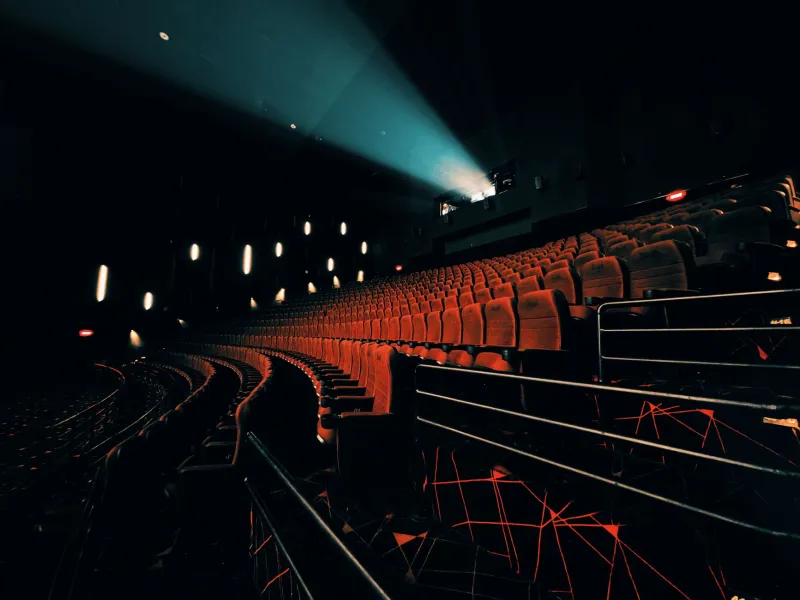
Somewhere in the middle of a mainstream blockbuster — one you've probably seen, one with a Wikipedia page and a Rotten Tomatoes score and a merch line at Target — a handful of people in a darkened theater reported seeing something that wasn't supposed to be there. Not a continuity error. Not a reflection in a window. Something deliberate. A face. A room. A few seconds of footage that evaporated before anyone could point at the screen and say there, right there.
By the time the credits rolled, those people had already started typing.
The Reports
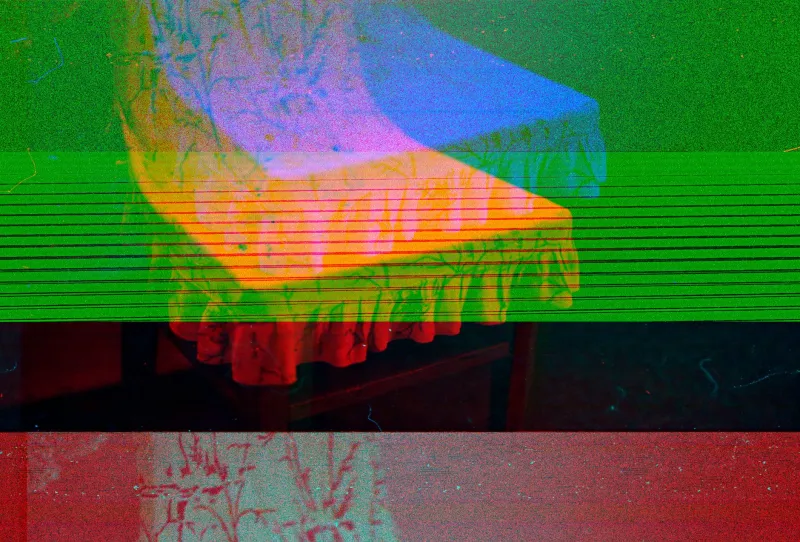
The community doesn't have a single home base. It lives across subreddits, private Discord servers, and a few long-running forum threads that have been accumulating posts since the mid-2010s. The terminology shifts depending on who you're talking to — some call them "ghost cuts," others say "spliced frames" or "temporal inserts." The experience being described is roughly consistent: during playback of an otherwise normal film, certain viewers perceive a brief visual interruption. Not a glitch. Not a compression artifact. Something composed. A shot that feels like it belongs to a different movie, or to no movie at all.
One poster on a film theory forum described it like this: "It's not blurry or degraded. It's clean. It looks like it was meant to be seen, just not by everyone."
The reports cluster around specific genres — psychological horror, prestige drama, certain kinds of experimental animation — but they're not exclusive to them. A handful of accounts involve major studio comedies. At least two involve a Disney animated feature, which is either extremely funny or extremely unsettling depending on your disposition.
What the Tech Actually Says
Here's where it gets complicated. Standard theatrical projection runs at 24 frames per second. Consumer streaming tops out at 60fps for high-frame-rate content, though most narrative film is still delivered at 24. A single frame at 24fps lasts approximately 41 milliseconds. The human visual system can, under certain conditions, register stimuli presented for as little as 13 milliseconds — though conscious recognition of that stimulus is a different matter entirely.
Subliminal advertising via single-frame insertion was famously alleged in the 1950s, largely debunked as a hoax, and subsequently banned by the FCC anyway. The consensus among researchers is that while the eye can technically receive a single-frame image, the brain's processing pipeline doesn't reliably decode it into recognizable content. You might feel something. You probably won't see something.
But the people in these communities aren't claiming to see one frame. They're describing sequences. Two, three, sometimes five or six seconds of material — short enough to feel dreamlike, long enough to carry narrative weight. That puts the phenomenon in a different category entirely, because five seconds of footage at 24fps is 120 frames. That's not subliminal. That's a cut.
The Collective Dimension
What makes this genuinely strange is the corroboration problem — or rather, the lack of one. When two people watching the same screening independently report the same phantom sequence, the easy explanation disappears. Shared delusion requires contact. Coincidence requires credulity.
There are documented cases within these communities where multiple attendees of the same screening — people who didn't know each other, sitting in different parts of the theater — described nearly identical intrusions. Same approximate timing within the film. Similar visual content. One recurring motif that shows up in multiple unrelated accounts involves a hallway filmed from a low angle, empty, with a single practical light source. Nobody knows what movie it belongs to. Nobody can prove they saw it.
The communities have developed their own verification protocols, which is either admirably rigorous or beautifully paranoid. Screenshots are treated with suspicion because they're trivially faked. Timestamped written accounts filed immediately after viewing carry more weight. Cross-referencing between strangers who had no prior contact is treated as the gold standard.
The Filmmaker Theory
A contingent within these communities believes the footage is intentional — that certain directors or editors are embedding material into their films as a kind of perceptual easter egg for viewers with specific neurological profiles. The theory holds that some people's visual processing systems are simply tuned differently, more sensitive to rapid temporal change, and that a filmmaker who understood this could construct a secondary viewing experience invisible to the majority of the audience.
It's a compelling idea. It's also completely unverifiable, which is either a point against it or, depending on your philosophy, a point in its favor.
A few filmmakers have been directly asked about it in interviews over the years — not always by journalists, sometimes by fans at Q&As who clearly came prepared. The responses have ranged from genuine confusion to what a certain kind of person might describe as a very careful non-denial.
The Neurological Counter
The more grounded explanation involves something called motion-induced blindness and its inverse, a suite of perceptual phenomena where the brain fills in, drops out, or confabulates visual information during rapid scene changes. Cinema is, structurally, an ideal environment for this. Dark room. Sustained attention. Emotional priming from score and narrative. The cut is cinema's most powerful tool precisely because the brain bridges the gap — it does the work of continuity. Under certain conditions, it might do extra work. It might bridge a gap that isn't there, constructing footage from the raw material of expectation and context.
That would explain the experience. It doesn't fully explain the corroboration.
Still Looking
The community keeps watching. They organize group viewings when they can, compare notes in real time via text during streaming sessions, and maintain running logs of reported incidents sorted by film title, studio, and director. It's an obsessive practice dressed up in the language of citizen investigation, and it has produced, so far, zero conclusive evidence and an enormous amount of genuinely compelling testimony.
Maybe that's the point. Maybe the gap between what the projector emits and what the eye receives is where this whole thing lives — in that 41-millisecond window, in the space the brain floods with its own signal.
Or maybe someone, somewhere, is hiding something in the cut. And most of us just aren't looking hard enough between the frames.