Corrupt Cartridge Gospel: The Gamers Reading Salvation in Broken Sprites
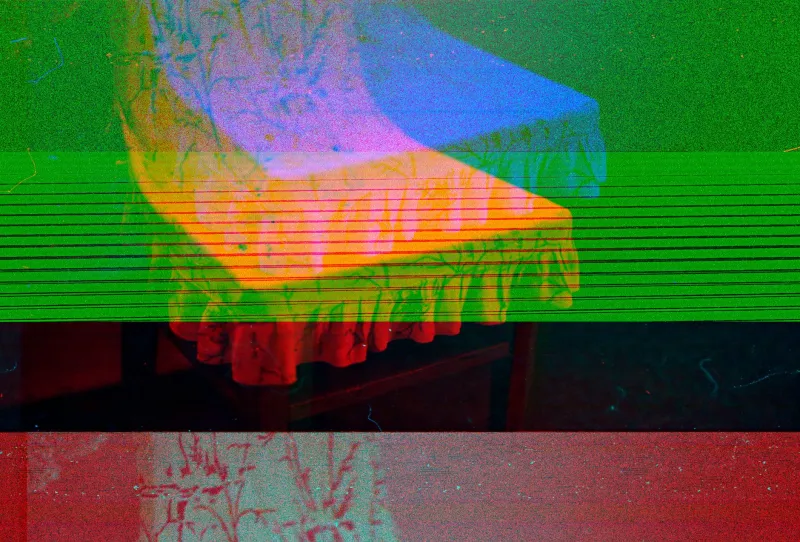
There's a specific kind of silence that happens right before a classic cartridge game falls apart on you. The music stutters. A sprite stretches across the screen in a direction physics wouldn't allow. Then everything goes chromatic and wrong in a way that feels almost intentional — like the game is trying to tell you something it couldn't fit into the normal code.
For most people, that's a cue to blow into the cartridge and restart. For a quietly growing underground community scattered across Discord servers, niche subreddits, and encrypted forums, it's the whole point.
They call themselves different things depending on the corner of the internet you find them in. Sprite readers. Glitch seers. A few lean fully into the spiritual branding and go with pixel prophets. What they share is a practice that sits at the intersection of retro game preservation, pattern recognition, and something that looks a lot like faith.
The Cartridge as Oracle
The basic premise sounds wild until you sit with it for a while. Classic 8-bit and 16-bit cartridges — your NES, SNES, Sega Genesis hardware — store data on chips that degrade over time. Heat, humidity, the physical act of being inserted and removed hundreds of times: all of it introduces corruption into the ROM. Sprites that were once clean pixel art start to fracture. Enemy characters render half-invisible or stretch into abstract geometry. Text boxes spit out strings of characters that weren't in the original game.
Most collectors call this wear and tear. The pixel prophets call it signal.
"The original programmer put down one layer of information," explains a user who goes by cartridge_saint on one of the larger Discord servers dedicated to the practice. "But the hardware and time put down another layer on top of it. That second layer isn't random. It can't be. There are too many patterns."
The community catalogs these patterns obsessively. Screenshots of corrupted sprites get uploaded to shared databases and cross-referenced for recurring visual elements — specific color combinations, recurring geometric shapes, distortions that appear in unrelated games across different hardware generations. Some members have built rudimentary classification systems, assigning symbolic meaning to particular glitch types the way a tarot reader assigns meaning to a card.
Deliberate Damage as Ritual
Here's where the practice gets genuinely strange. Passive observation wasn't enough for a significant portion of the community. If corruption produces signal, the reasoning went, then deliberately introducing corruption should produce clearer signal — or at least different signal.
Some members began experimenting with controlled ROM corruption using hex editors, modifying specific bytes in ROM files to trigger predictable graphical breakdowns. Others went analog, applying heat or mild physical stress to cartridge boards to induce hardware-level glitches. A few developed elaborate rituals around the process — specific times of day to perform the corruption, particular questions held in mind while the damage was introduced, documented intentions written down before the cartridge was powered on.
The results get treated like readings. Members post their corrupted screenshots alongside interpretations, debating the meaning of a particular sprite's distortion the way you'd debate the imagery in a dream. A character whose face has fragmented into abstract blocks might represent confusion or transition. A background that has collapsed into a single repeating color could signal stagnation. The symbolism isn't fixed — it's negotiated collectively, updated as the community's shared vocabulary evolves.
"I was going through something genuinely terrible," one member wrote in a long forum post that circulated widely in the community last year. "I wasn't looking for this. I was just playing an old copy of a game I loved as a kid and the ROM started corrupting mid-session. The way the main character's sprite broke apart looked exactly like what I was feeling. I know that sounds insane. I don't care."
That post generated hundreds of replies from people with nearly identical stories.
The Preservation Paradox
The practice creates an obvious tension with traditional game preservation ethics. The retro gaming preservation community has spent decades arguing that original hardware and unmodified ROM files are cultural artifacts that deserve protection — the digital equivalent of first editions. Deliberately corrupting them feels like sacrilege to that crowd.
The pixel prophets mostly don't engage with that criticism directly. A few of the more technically sophisticated members point out that they work exclusively with ROM copies, never originals, and that the corruption they introduce is documented and reversible. Others are more philosophical about it: if a piece of software has already degraded beyond playability, what exactly is being lost by reading the wreckage?
Some preservation-minded members of the community have actually found an uneasy common ground with the practice. The detailed documentation of specific corruption patterns — which bytes produce which visual effects, how different hardware generations respond to the same modifications — has produced genuinely useful data for people trying to understand how classic game hardware fails over time.
"We're basically stress-testing these systems in ways nobody else thought to," says a member who works in software QA by day and spends nights cataloging corruption patterns in a private wiki. "The spiritual framing isn't my thing, but the documentation is real."
Pattern Recognition at the Edge
The more skeptical read on all of this is straightforward: humans are pattern-recognition machines running on hardware that wasn't built with an off switch. Show us noise and we'll find signal. Show us static and we'll see faces. The fact that corrupted sprites produce interpretable meaning says more about the interpreters than the cartridges.
The pixel prophets are largely aware of this critique. Most of them don't reject it so much as fold it into the practice. If the human brain is wired to extract meaning from chaos, and if that extraction process produces genuine psychological insight or comfort, does it matter whether the original source was "actually" meaningful? The cartridge becomes a mirror. The glitch becomes a prompt.
There's something almost classically American about the whole enterprise — the DIY spirituality, the repurposing of consumer technology as sacred object, the communal interpretation happening outside any institutional framework. These aren't people waiting for someone to hand them a belief system. They're building one out of broken pixels and blown capacitors.
The corrupted sprite of a character you loved at age nine, rendered unrecognizable by time and entropy, staring back at you from a screen — there's a kind of poetry in that regardless of what you believe about dimensions or signals or coded messages.
Something got lost in the translation from original to degraded. The pixel prophets are just insisting on asking what.