The Missing Milliseconds: Inside the Obsessive Hunt for Truth in Digital Dead Time
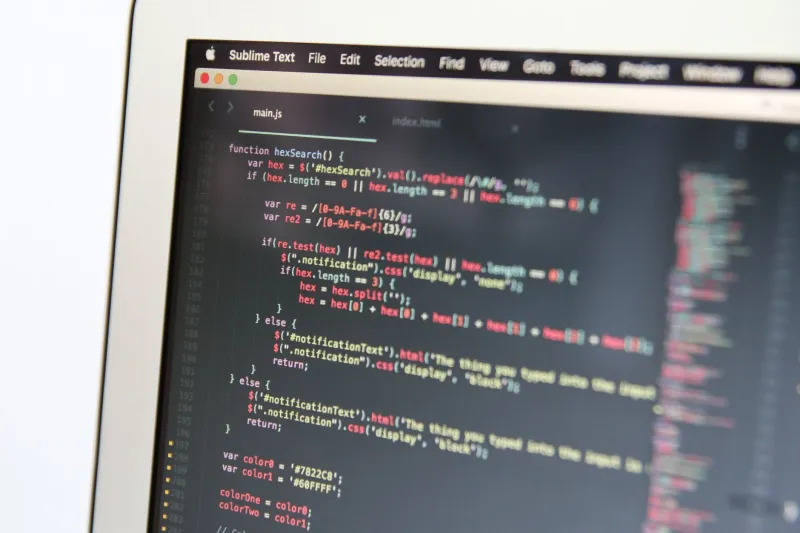
There's a moment in every rabbit hole where the floor drops out. For Marcus, a former IT contractor living outside Columbus, Ohio, that moment came at 2:47 in the morning when he was running a hex editor over a dashcam clip from a high-profile traffic stop that had gone viral. The official footage was sixteen minutes and forty-three seconds long. But Marcus had found something the news cycle hadn't bothered to mention: a 340-millisecond gap buried at the eleven-minute mark. No dropped frames. No corrupted data flag. Just absence — clean, deliberate-looking absence.
"That's not a compression artifact," he wrote on the forum thread that would eventually pull in hundreds of replies. "That's a cut."
Maybe it was. Maybe it wasn't. But that ambiguity is exactly the frequency that timestamp hunters broadcast on.
Frame by Frame by Frame
The community doesn't have one name for itself. You'll find them scattered across Discord servers, private subreddits, and long-running forum threads on sites that look like they haven't been redesigned since 2004. Some call themselves media forensics hobbyists. Others lean into the more charged label: temporal analysts. A few just say they're people who don't trust what they're being shown.
What unites them is methodology. These aren't people sitting around speculating. They're running software — tools like MediaInfo, FFprobe, and custom Python scripts that parse the metadata baked into digital files at a level most people never think about. Timestamps in digital video and audio aren't just start-and-stop markers. Every frame, every audio sample, every data packet carries embedded timing information. When those internal clocks don't line up perfectly, the file logs it. Timestamp hunters read those logs the way some people read horoscopes — except with significantly more terminal windows open.
The question isn't whether anomalies exist. They do, constantly. Compression algorithms, network latency, camera firmware bugs, and sloppy post-production editing all leave fingerprints in the metadata. The real question — the one that splits forensic professionals from the fringe community — is whether those fingerprints mean anything beyond technical sloppiness.
The Toolkit
A mid-tier timestamp hunter's setup would look familiar to anyone who's spent time in data analysis circles. FFprobe for parsing container metadata. Audacity or iZotope RX for audio waveform inspection. Hex editors for going deeper than any GUI will let you. Some in the community have built their own scripts that flag PTS (presentation timestamp) discontinuities automatically, spitting out a report of every single moment in a file where time doesn't flow quite right.
The more elaborate practitioners run files through multiple tools and cross-reference results, building what they call "temporal maps" — visual representations of where a file's internal clock stutters, skips, or inexplicably resets. On the surface, it looks like rigorous work. And honestly, some of it is.
Dr. Priya Anand, a digital media researcher who has studied online forensics communities without endorsing their conclusions, acknowledges the technical literacy involved. "These communities have taught themselves real skills," she told us. "The problem isn't the tools. It's the interpretive leap — the assumption that anomaly equals intent."
That leap is where things get interesting.
Meaning in the Gap
For timestamp hunters, the gap is never just a gap. The 340 milliseconds Marcus found in that dashcam footage? His community spent three weeks building a theory around it. The theory was wrong — a local journalist eventually got the original uncompressed file and showed the discontinuity was a known firmware issue with that particular camera model. But Marcus wasn't entirely deterred. "They could have used that cover to hide something real," he posted afterward. "The firmware excuse is actually perfect."
This is the psychological architecture that makes the community so durable and so hard to argue with. Every debunking becomes evidence of sophistication. Every explanation becomes a layer of the onion. The gap doesn't need to be proven intentional — it just needs to remain theoretically possible that it was.
Psychologists who study pattern recognition have a term for the broader phenomenon: apophenia, the tendency to perceive meaningful connections between unrelated things. It's the same cognitive engine that sees faces in clouds or hears words in white noise. Digital files, with their invisible layers of metadata and their genuinely arcane technical behavior, are almost perfectly designed to feed that engine.
But dismissing the entire community as apophenic noise misses something. A non-trivial number of documented cases of video manipulation have been caught through exactly this kind of granular metadata analysis — in legal proceedings, journalism investigations, and academic research. The tools work. The instinct to look isn't crazy. It's the interpretive framework that wobbles.
The Social Architecture of Suspicion
Spend enough time in these spaces and you start to notice the social dynamics that keep them running. There's a reputation economy built on who can find the most significant anomaly, who has the most sophisticated setup, who was right about something first. New members post their finds and wait for the senior analysts to weigh in. Skepticism toward official explanations is the default social currency.
There's also something lonelier happening underneath that. Several people in these communities, when they open up, describe a feeling of being fundamentally unable to trust what they're seeing. Not just in files — in everything. The timestamp hunting is, for some of them, a way of making that distrust productive. If the world is full of hidden edits, at least you can look for them. At least the search gives the suspicion somewhere to go.
"I'd rather be wrong and looking than right and blind," one community member wrote in a thread about methodology. It's a sentiment that comes up in variations constantly. The search is the point as much as the finding.
Static and Signal
Here at EOPL Static, we're not in the business of telling you what's noise and what's signal — that's kind of the whole thing, isn't it? The timestamp hunters are doing something genuinely weird and genuinely human: they've looked at the invisible scaffolding of digital media and decided it's a text worth reading. Sometimes they're wrong. Sometimes they're embarrassingly wrong. But the practice itself — the refusal to take the surface of a file at face value, the insistence that the metadata has something to say — that's a posture we recognize.
The official story about digital artifacts is that they're boring. Compression does weird things. Cameras have firmware bugs. Networks drop packets. Move along.
Maybe. But the next time your video player stutters for a fraction of a second on footage that matters, know that somewhere out there, someone is already running FFprobe on it. They're building a temporal map. They're looking for the shape of the absence.
And they are absolutely not going to sleep until they find it.