Ghost Data: The Haunting You Can't Uninstall
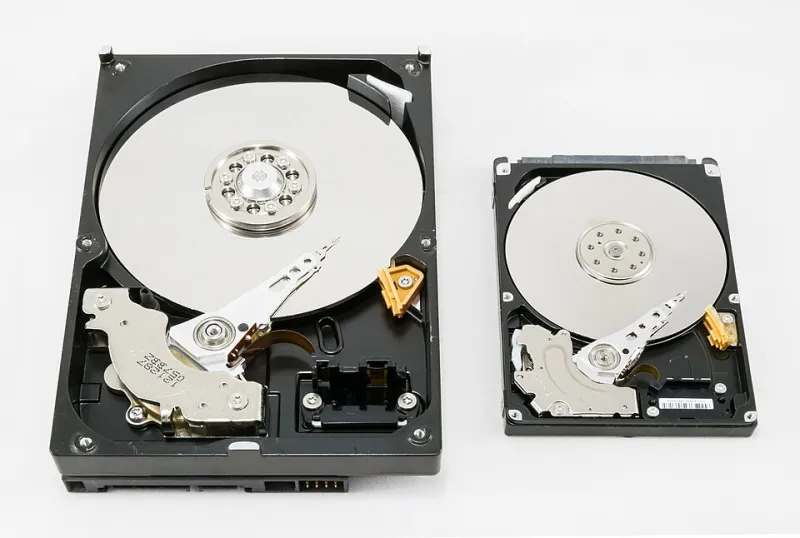
Photo: Jacek Halicki, CC BY-SA 4.0, via Wikimedia Commons
There's a ritual most of us perform without thinking about it. A file gets dragged to the trash icon — that cartoonish little bin — and we feel something like relief. A photo, a document, a conversation thread we'd rather not explain to anyone. Gone. Except it isn't. Not really. Not even close.
The truth about deletion is one of the stranger secrets embedded in modern digital life, and it sits at the intersection of computer forensics, personal privacy, and something that feels uncomfortably close to ghost stories.
The Lie of the Empty Trash
When you delete a file on most operating systems, what actually happens is closer to removing a street sign than demolishing a building. The data itself — the actual ones and zeros, the magnetic impressions on your drive — stays right where it was. The system simply stops pointing to it. It marks that space as available for future use. But until something new writes over it, the old information is still there, patient and silent.
"People have this mental image of data just vanishing," says one data recovery specialist who works with law firms and private clients in the Pacific Northwest. "Like it combusts. But what you've really done is take the label off a jar and put it back on the shelf. The contents are still inside."
This is the foundational principle behind digital forensics — the field that lets investigators recover files from devices wiped by everyone from corporate fraudsters to people who just wanted a clean slate. Recovery software scans for those orphaned data structures, the remnants without addresses, and pieces them back together. The success rate, depending on how much new data has been written over the old, can be startling.
Metadata: The Fingerprint You Forgot
But raw file recovery is only part of the picture. The more insidious layer is metadata — the data about data. Every file carries a kind of invisible biography: timestamps recording when it was created, modified, accessed. Geolocation tags embedded in photos. Author information baked into documents. Device identifiers. Network logs. Version histories.
Even when the file itself is scrubbed, metadata echoes often persist in unexpected places — backup systems, cloud sync logs, email servers, browser caches, operating system journals. Privacy advocates have started calling this phenomenon "data shadowing," the idea that every digital action casts a residue that outlasts the action itself.
"Metadata is the context that makes content dangerous," explains a digital rights researcher affiliated with a civil liberties nonprofit in Washington, D.C. "The document might be gone, but the system still remembers that you opened it, how long you had it, what network you were on. That context can tell a story all by itself."
For journalists protecting sources, for activists operating in surveilled environments, and for ordinary people navigating messy personal situations, this is not an abstract concern. The incomplete erasure isn't a bug in the traditional sense — it's a structural feature of how modern file systems were designed, optimized for speed and recoverability rather than privacy.
The Incomplete Exorcism
There's an artist collective based out of Chicago — they prefer not to be named in full, which feels appropriate — who has spent the last three years building installations entirely from recovered data fragments. Orphaned thumbnails. Partial audio files. The metadata skeletons of images whose actual pixels are long gone.
Their most recent piece, displayed at a small gallery in Wicker Park, consisted of a wall-sized projection of recovered file names — just names, no content — from a batch of hard drives purchased at an estate sale. The drives belonged to a single household across four decades. The names alone told a fragmented, haunting story: tax documents, a child's school project, correspondence whose subject lines suggested a marriage in various stages.
"We think of deletion as an ending," one of the collective's members explained via email. "But it's more like a fade. The signal doesn't cut off — it just gets quieter. We're working in that frequency range."
This framing — deletion as attenuation rather than termination — maps surprisingly well onto how the technology actually functions. Forensic specialists describe the process of data decay on a physical drive as gradual magnetic weakening, not sudden erasure. On solid-state drives, the architecture is different, but the principle of incomplete departure persists in different forms.
What Actually Works (And What Doesn't)
For people who genuinely need data gone, the options are more involved than most realize. Overwriting — writing random data over a file multiple times — can be effective for traditional spinning hard drives, though even this is subject to debate among specialists. Encryption before deletion adds another layer: even if fragments are recovered, they're unreadable without the key.
For solid-state drives, the situation is more complex due to how SSDs manage storage internally. Physical destruction — actual shredding or degaussing — remains the only method that forensic professionals universally agree upon for truly sensitive data.
And then there's the cloud, which introduces an entirely different set of complications. When you delete something from a cloud service, you're largely trusting the provider's deletion policies, retention schedules, and backup architectures. The data may persist on remote servers for months under standard retention protocols, sometimes longer.
"People sign these terms of service and assume deletion means deletion," the D.C. researcher notes. "The actual data lifecycle is much longer and messier than the interface suggests."
The Signal in the Sediment
What makes all of this feel genuinely strange — beyond the practical privacy implications — is the philosophical undertow. We live in a culture that treats digital actions as ephemeral, disposable, consequence-free. The interface encourages this. The trash can icon, the satisfying animation of files disappearing, the clean empty-state screen.
But underneath that surface, in the electromagnetic sediment of our devices, a different record exists. Layered, partial, fragmented — but persistent. Less like a diary and more like an archaeological site. The Chicago collective's work keeps returning to this idea: that our devices are accumulating a kind of unconscious memory, one that doesn't care about our intentions or our desire for clean breaks.
There's something uncomfortable in that, and something that EOPL Static finds worth sitting with. The digital landscape isn't a whiteboard. It's closer to a palimpsest — the old manuscript scraped and written over, where the previous text bleeds through.
You deleted it. It heard you. It's just not gone.