Nobody's Broadcasting: The Obsessive Hunt for Radio Signals That Shouldn't Exist
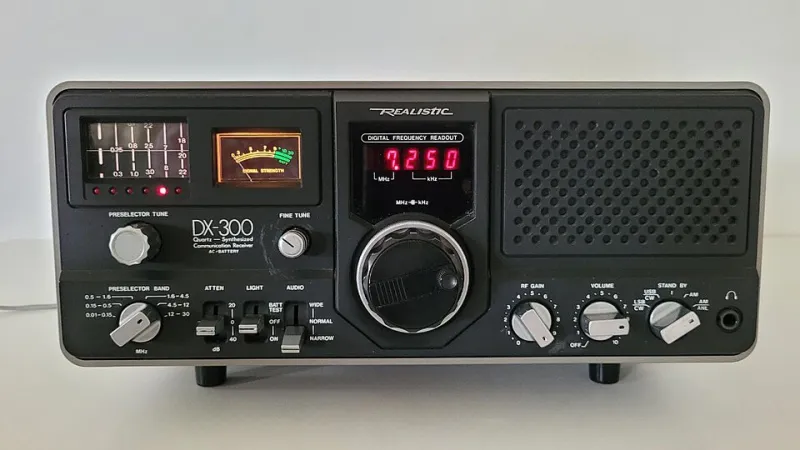
Somewhere around 3 a.m. on a Tuesday in rural Ohio, a retired electrician named Dale sits in his garage with a modified Icom receiver, a legal pad, and a thermos of coffee that stopped being hot around midnight. He's not looking for anything specific. He's just scanning. And then — there it is again. A carrier wave on 6925 kHz, upper sideband, pushing music that sounds like it was recorded inside a broken refrigerator. No call sign. No ID. No explanation. It's gone in four minutes.
Dale has logged this particular signal eleven times in the past eight months. He's never been able to triangulate its origin. Neither has anyone else.
The Signal Doesn't Care If You Believe In It
Phantom radio — the informal term used by the hobbyist community — isn't a new phenomenon. Pirate radio has existed almost as long as regulated broadcasting itself, and unlicensed transmissions have been documented on and off the shortwave bands for decades. But what makes a growing subset of these signals genuinely strange isn't the illegality. It's the incoherence.
Legitimate pirate stations, even rogue ones, follow a recognizable logic. They play music, run commentary, maybe drop a fake call sign for the bit. The signals that people like Dale are chasing don't do any of that. They broadcast tones. Fragments of audio that loop without resolution. Occasionally, something that sounds almost like speech — reversed, or pitched wrong, or layered over white noise in a way that makes it impossible to parse.
The Free Radio Network, a loose coalition of hobbyist monitors operating primarily across the Midwest and Pacific Northwest, has catalogued over 340 distinct "anomalous transmission events" since 2019. That's their language, deliberately clinical. They're careful not to overclaim. "We're not saying these are mysterious," reads the group's website, in a tone that absolutely implies they're mysterious. "We're saying we can't account for them through standard means."
Mapping the Noise
The technical process of chasing these signals is more rigorous than you might expect from a community that operates largely on forum posts and Discord threads at 2 a.m. Signal mapping — the practice of cross-referencing reception reports from geographically distributed listeners to triangulate a transmission source — requires precise timing, calibrated equipment, and a lot of coordination.
When a signal pops up, monitors across different states compare notes in real time. Reception strength, frequency drift, propagation characteristics. If a signal is coming from a fixed terrestrial source, the math should eventually point somewhere. In documented phantom cases, it frequently doesn't. The triangulation data either contradicts itself or produces an origin point in the middle of open water, unpopulated federal land, or — in one particularly discussed case from 2021 — a location that resolves to a decommissioned Air Force relay station in the Nevada desert that, per public records, has had no active equipment since 1994.
Nobody drove out there to check. Or if they did, they haven't said so publicly.
What the Theories Actually Look Like
The explanations people reach for span a pretty wide range, and the community doesn't enforce orthodoxy. Equipment malfunction is the most boring answer and probably accounts for a significant chunk of reports — intermodulation distortion, oscillator drift in aging transmitters, RF interference from industrial sources can produce signals that behave weirdly and resist identification. Radio is a physical medium operating in a physical world, and physical things break in ways that produce strange artifacts.
But then there are the cases that don't fit neatly into malfunction logic. Signals that appear on multiple frequencies simultaneously. Broadcasts that have been received across regions separated by thousands of miles at the same timestamp, which creates propagation math that experienced operators describe as "not quite right." One cluster of reports from late 2022 involved a signal that multiple independent listeners described in almost identical terms: a low drone, followed by what sounded like a children's counting song played backward, followed by silence, repeated exactly three times before the carrier dropped.
The art project theory gets floated regularly. Someone with enough technical knowledge and enough dedication to the bit could, in theory, run a clandestine transmitter designed specifically to be weird and untraceable. Some in the community point to the aesthetic consistency of certain phantom signals — the sense that someone is making choices, not just malfunctioning — as evidence of intentionality. A few of the more documented signals have a quality that hobbyists describe as "curated strange," which is a phrase that would fit comfortably on the EOPL Static masthead and probably shouldn't apply to radio waves.
The Community That Formed Around Nothing
Here's the part that's maybe more interesting than the signals themselves: the people who gather around them.
The forums and servers dedicated to phantom signal tracking have developed their own culture, their own vocabulary, their own internal debates that can get surprisingly heated. There are splitters — people who believe different reported signals are actually the same source — and lumpers, who think the anomalies are too varied to have a single explanation. There are hardcore skeptics who participate primarily to debunk reports, and there are true believers who've built elaborate theories connecting specific signals to government testing programs, rogue AI systems, or what one particularly committed poster calls "infrastructure that forgot it was decommissioned."
What they share is the practice itself. The late nights. The careful logging. The group experience of listening to something that isn't supposed to be there and trying to make it mean something.
Dale, back in his Ohio garage, puts it simply enough: "I don't know what I'm hearing. But I know I'm hearing it. And so does everyone else on the thread. That's enough for now."
The signal, whatever it is, doesn't seem to care about being understood. It just keeps transmitting.