Still Transmitting: The AM Stations That Walked Off the Air and Never Came Back
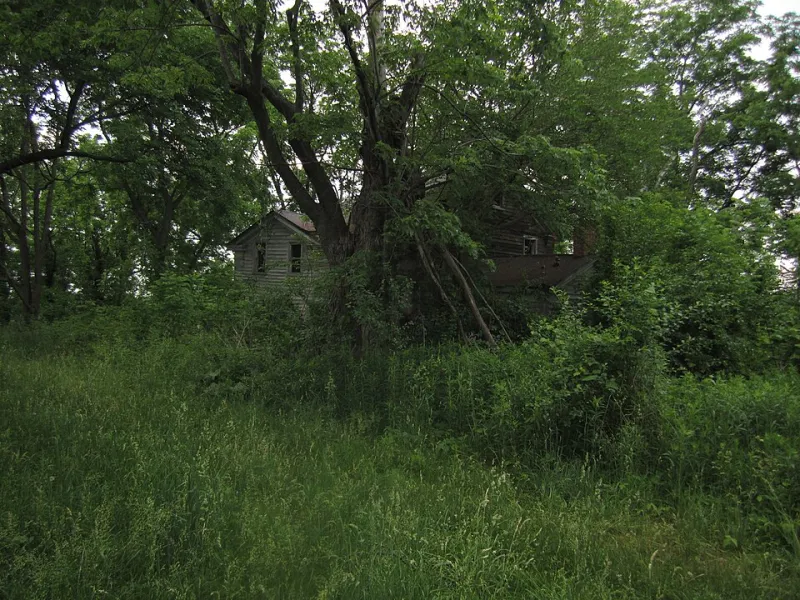
Photo: B137, CC BY-SA 4.0, via Wikimedia Commons
There's a particular kind of silence that radio people recognize immediately. Not dead air — dead air has texture, a low hiss that tells you something is still running. This is different. This is the silence of a frequency that used to hold something and now holds nothing, like pressing your ear to a wall where you swear a conversation used to live.
Across rural America — deep in the Midwest, scattered through Appalachia, tucked into high desert towns that barely register on modern maps — there are AM stations that simply vanished. Not shut down. Not sold. Not reassigned. Just gone, mid-broadcast, leaving behind towers that still stand, studios that were never cleaned out, and FCC records that trail off into bureaucratic fog.
The people hunting these frequencies down are a specific breed of obsessive. And what they've found is genuinely strange.
The Paper Trail That Goes Nowhere
When a licensed radio station closes in the United States, there's supposed to be paperwork. The FCC requires licensees to file a formal notification, return or surrender the license, and in most cases, notify the community they were serving. It's not a complicated process. Most stations that go dark do it cleanly.
But a small, persistent cluster of AM stations — mostly low-wattage operations that served rural communities between roughly the late 1970s and early 2000s — seem to have skipped that step entirely. Their FCC records don't show a closure. In some cases, the license simply appears to have lapsed with no renewal filed and no follow-up action documented. In others, the record is murkier: ownership transfers that reference entities that don't appear to exist, addresses that resolve to empty lots, contact names that produce no search results anywhere.
"It's like they just decided to stop existing," says one collector who asked to be identified only as Reedmont, a handle he uses in the shortwave and AM hobbyist forums where these cases get discussed. "And the FCC, to be fair, probably had bigger things to worry about. A 250-watt station in a town of 3,000 people just quietly going off the air wasn't exactly a federal priority."
What's Left in the Archives
The audio evidence is fragmentary and weird. Reedmont and a loose network of fellow collectors have assembled recordings — some sourced from old cassette dubs, some from reel-to-reel transfers, a few from early digital captures made by hobbyists scanning the dial — that document stations in their final hours of broadcast. In most cases, the recordings are mundane: local weather, farm commodity prices, gospel programming, a DJ running through requests with the unhurried cadence of someone who has absolutely nowhere else to be.
And then, nothing.
One recording from what appears to have been a station in rural western Kansas — frequency and call letters withheld pending further verification — cuts off in the middle of a song. Not at the end of a song. Not at a station break. Mid-lyric. The collector who shared it describes the moment as "the audio equivalent of someone leaving a sentence unfinished and walking out of the room."
Another fragment, sourced from an estate sale in eastern Tennessee, captures what sounds like a brief on-air conversation between two people — possibly a DJ and a technician — before the signal drops. The exchange is too low to fully transcribe, but the tone is calm. Whatever happened, it apparently wasn't an emergency. At least not the kind that registers in a person's voice.
The Infrastructure Nobody Claimed
Here's where it gets genuinely eerie: the physical remnants.
In at least a dozen documented cases, the towers and studio buildings associated with these vanished stations were never formally decommissioned. Some were absorbed into other properties over time — a tower left standing in a field, a cinder-block studio building converted into a storage shed. Others just sit. Rusting. Occasionally fenced off with no-trespassing signs that predate the current property owners, who often have no idea what the structure actually was.
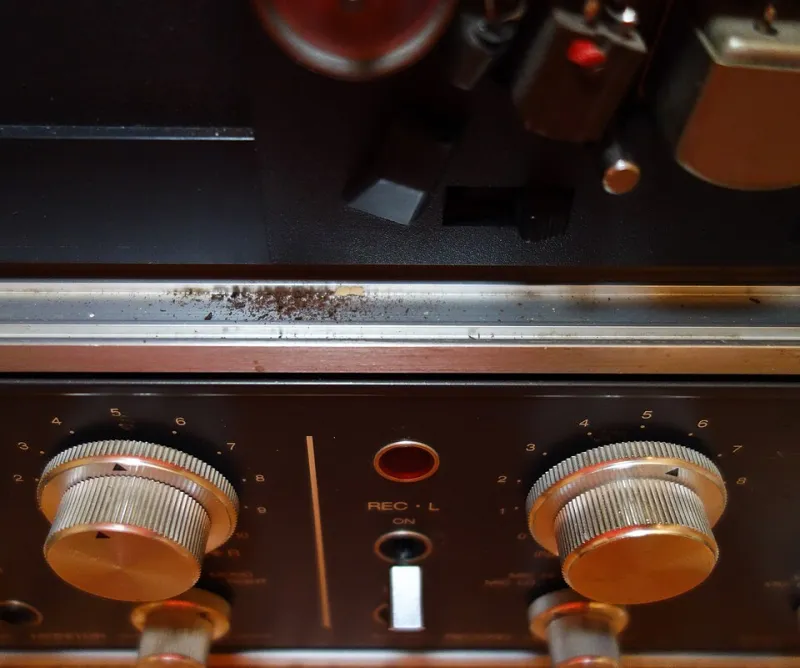
One researcher, a retired telecommunications worker in Missouri who posts occasionally to a regional history forum, spent two years trying to track down the former operators of a low-watt AM station that served a small community near the Arkansas border. He located the original studio building — still standing, still containing a turntable, a reel-to-reel machine, and a transmitter console that he describes as "just sitting there like someone stepped out for lunch in 1987 and never came back."
He found no surviving employees. The station's listed owner had died in the early 1990s. The estate had been settled, but no one in the family recalled the radio station being part of it. "They didn't even know it existed," he wrote. "The guy apparently just ran it himself, and when he was gone, it was gone."
What People Think Happened
Theories in the collector community range from the mundane to the conspiratorial, and honestly, both ends of that spectrum have some traction.
The boring explanation — and the one that's probably true for most cases — is simple neglect. Small AM stations in rural markets were economically marginal even during their peak years. Many were passion projects run by one or two people with minimal staff. When the person running it died, retired, or simply lost interest, there was often no succession plan, no buyer, and no one with enough institutional knowledge to handle the regulatory close-out properly. The station just stopped. The FCC eventually noticed, or didn't.
But some cases don't fit that template cleanly. A few of the vanished stations were mid-sized operations with actual staff, actual advertisers, and actual community presence. Their disappearances prompted local confusion at the time — listeners calling in, finding no answer; advertisers left with unaired spots; community events that had been announced on-air and then went uncovered.
For these, the theories get more elaborate. Reedmont has documented at least three cases where former listeners believe the station was purchased and deliberately silenced — a frequency acquisition play that never resulted in new programming. In one case, a former advertiser claims to have been contacted by a representative of a company he'd never heard of, told the station was "transitioning," and never contacted again.
None of this rises to the level of provable conspiracy. But it's the kind of static that, once you hear it, is hard to tune out.
Listening for What Isn't There
There's something almost meditative about the way these collectors approach their work. They're not expecting answers, exactly. They're more interested in the shape of the question — in what it means that American broadcasting history has these small, dark gaps in it, these frequencies that once carried voices and music and local weather reports and now carry nothing.
"Radio felt permanent when I was a kid," Reedmont says. "Like it was just always going to be there. And then you start looking into this stuff and you realize how fragile it all was. How many of these stations were basically one person's will to keep going, and when that will ran out, so did everything else."
The towers are still out there. Somewhere in a Kansas field, a Tennessee hollow, a stretch of high desert outside of nowhere, there's a steel structure that once threw a signal across the dark and now just stands in it.
The frequency is still technically assigned, in some cases. Technically, something could still be broadcasting.
Somebody should probably check.