Tape Runners: The Underground Collectors Hoarding Television's Forbidden Seconds
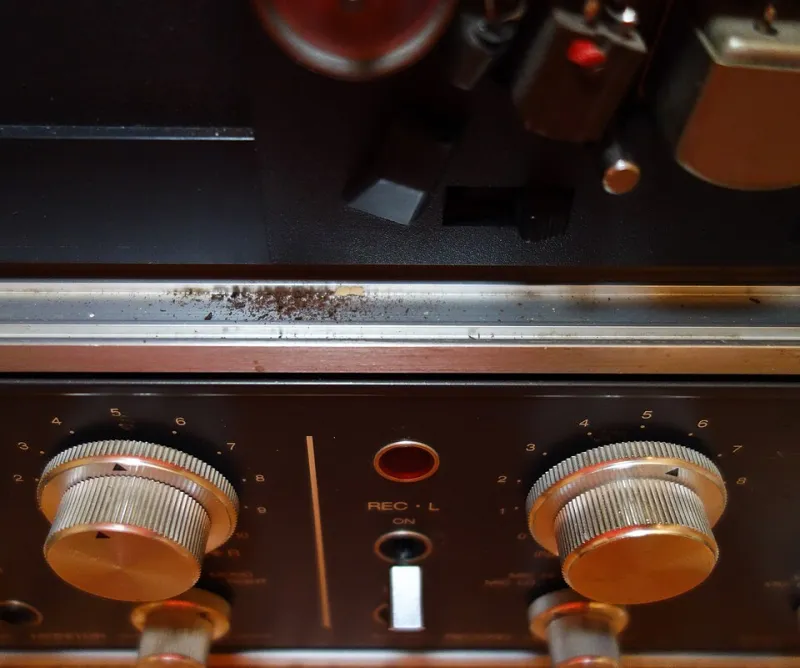
Photo: Danielteolijr, CC BY-SA 4.0, via Wikimedia Commons
There's a Discord server — won't say which one — where the pinned message reads: what they pulled is what matters. No context. No explanation. Just that sentence sitting at the top of a channel where people quietly trade links to things that were never supposed to outlive their original broadcast.
Welcome to the world of lost footage collecting. It's messier than film preservation, weirder than bootleg culture, and somehow more urgent than either.
The Gaps Are the Point
Most people think of TV history as a continuous record. It isn't. American broadcast television has always had holes in it — segments yanked mid-run, pilot episodes shelved after test screenings, commercials pulled within hours of their first airing, live moments quietly excised from rerun packages. The official story of what aired is, at best, an edited highlight reel of the edited highlight reel.
Collectors in this space — sometimes called tape runners, sometimes just archivists, though they bristle at both labels — aren't interested in the official story. They want the cuts. The pulls. The what-got-removed-and-why.
"A deleted scene from a movie is a curiosity," says one collector who goes by Ferrite online and has been doing this for about twelve years. "A pulled TV segment is a document. It tells you what someone decided the public couldn't handle, or what a sponsor didn't want attached to their brand, or what a network thought would get them in front of a Senate subcommittee. That's history. That's actually history."
What Gets Traded
The inventory in these circles is genuinely strange. We're talking about things like:
- A 1970s Saturday morning cartoon episode that got yanked after one airing due to a content complaint that nobody can fully verify anymore
- A local news segment from the mid-'90s that ran once in a single market before the station pulled it — the reason officially listed as "technical issues," unofficially listed as nothing, because there's no official record at all
- A national brand commercial that made it through final approval, aired twice during a primetime slot, and then disappeared so completely that even the ad agency that produced it doesn't seem to have a master copy
- Pilot episodes for shows that never got picked up, but not the kind you find on YouTube — the other kind, the ones where you can tell exactly why someone buried them
The rarity scales aren't about fame. A pulled segment from a forgotten regional talk show can be worth more in trade than a well-documented network blooper, simply because the regional tape has fewer surviving copies and a murkier paper trail.
The Infrastructure of the Hunt
Finding this stuff isn't a Google problem. It's a people problem. Most of what circulates in these communities came from someone who worked at a station, someone who recorded everything off-air for years on VHS, someone who bought a storage unit at auction and found a box of Betacam tapes, or someone who inherited a relative's basement full of equipment and didn't throw anything out.
Ferrite describes the acquisition process as "a really slow relationship business." You spend months in forums. You build credibility by sharing things you already have. You learn who to trust and, more importantly, who's selling fakes — because yes, fake lost footage is a thing. Doctored tapes. Fabricated provenance. Someone runs a VHS through a degradation filter, invents a plausible story about a 1988 regional broadcast, and suddenly it's circulating as a genuine artifact.
"Authentication is genuinely hard," admits another collector who asked not to be named at all, not even a handle. "Video degradation patterns can be faked. Tape oxide chemistry can be approximated. The only thing that's really hard to fake is the context — the people who remember it airing, the contemporaneous documentation, the way the content fits into what was happening in the culture at that exact moment."
Why the Missing Feels Sacred
There's something almost liturgical about the way these collectors talk about gaps in the broadcast record. Not in a mystical way, exactly — more like the way a historian talks about a missing chapter in a primary source. The absence itself becomes meaningful.
American TV has always presented itself as a kind of shared national experience. The same commercials, the same primetime lineup, the same interruptions for breaking news. That mythology of shared viewing depends on a clean, continuous record. When you find a hole in it — a segment that aired and then stopped existing, a commercial that ran and then got memory-holed — it disrupts that mythology in a way that feels significant.
"Every pull is a decision," Ferrite says. "Someone decided this shouldn't be part of the record. That decision is interesting. Who made it? Why? What were they protecting — a brand, a person, an idea about what TV is supposed to be? Those questions don't go away just because the tape does."
Some collectors frame it explicitly as media criticism. Others are more instinctive about it — they just know that the missing pieces feel important without being able to fully articulate why. A few lean into the stranger edges of it, treating certain pulled broadcasts as almost cursed objects, things that carry the weight of whatever got them removed.
The Legal Gray Zone
None of this is clean from a copyright standpoint. Broadcast content doesn't stop being owned just because the owner buried it. Most collectors in this space operate on an informal don't-ask-don't-tell basis with the legal reality of what they're doing. The argument — not a legal defense, just an argument — is that material which has been actively suppressed or allowed to disappear through institutional neglect occupies a different moral category than commercially available content.
Networks don't typically come after individual collectors. The volume is too low, the publicity too bad, and frankly, some of what's being preserved would embarrass the original rights holders more than the collectors. But it's not a stable situation, and everyone in the community knows it.
Static as Archive
What strikes you, spending time around these collectors, is how much they trust the noise. The degraded tape, the dropout artifacts, the tracking errors — these aren't flaws to be cleaned up. They're evidence. They prove the thing existed, that it passed through physical media, that it lived in the world before someone decided it shouldn't.
In a media environment where content gets quietly altered on streaming platforms, where old episodes get pulled and re-uploaded with scenes missing, where the digital record is more malleable than the analog one ever was — the obsession starts to make a different kind of sense.
The gaps aren't just interesting. According to the tape runners, they're the only honest thing left.